
Lee County Wanted Fugitives: Verified Sources
Lee County publishes no Most Wanted roster on its official site. The Lee County Sheriff's Office page is the verified sheriff source. It offers no wanted list, no count of active warrants, no archive, and no posting schedule. There is no county Crime Stoppers link either. That absence does not mean nobody in Lee County is wanted. It just means the sheriff has not posted a gallery.
The jail page links to OffenderWatch, which covers offender alerts and registration rather than warrants. The sheriff's app has a tip function. County minutes do not mention a reward program. They do not promise that tips stay anonymous either. A statewide notice, an old news story, or a third-party site is never a substitute for a sheriff-issued list.
If the county adds a verified wanted page later, the sheriff's site is where it will appear. Until then, open the Lee County Sheriff's Office source page before trusting any outside notice you find.
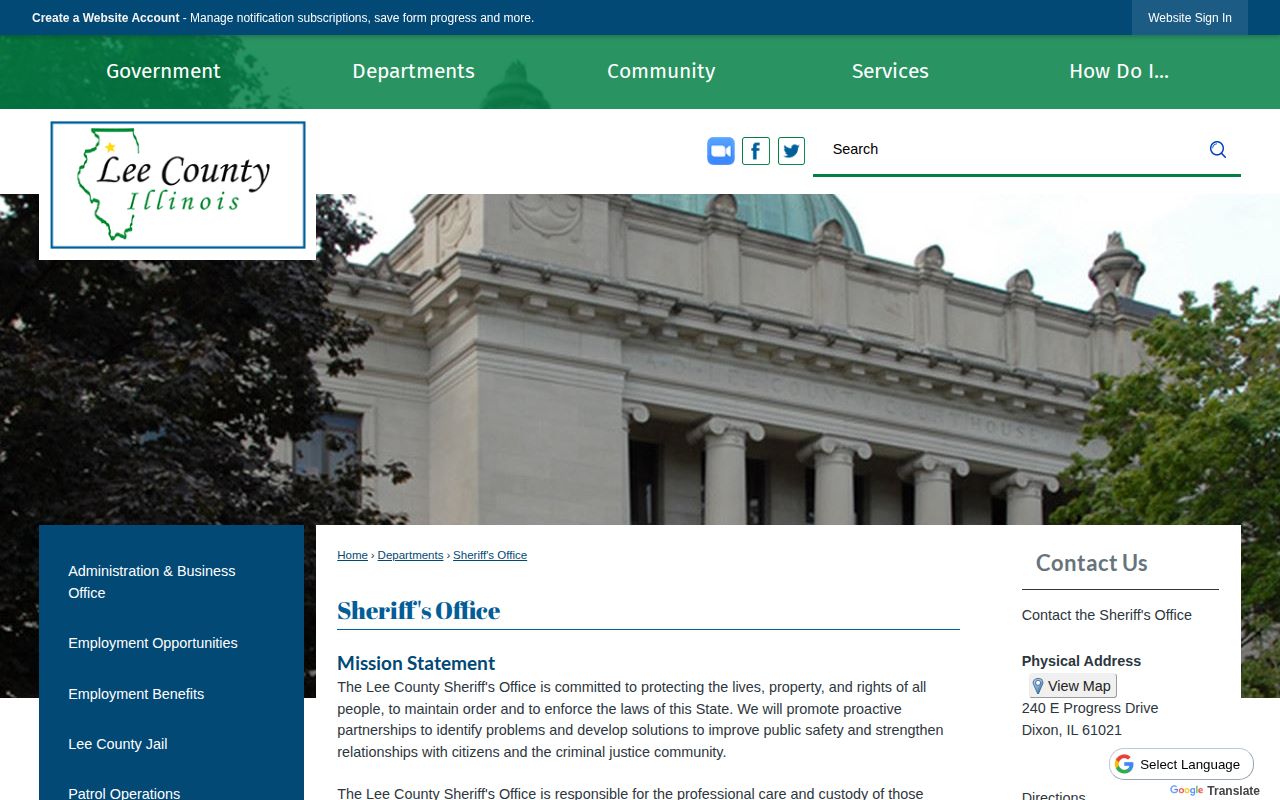
The screenshot shows the agency's official page itself. It contains no wanted list and no booking-photo gallery, so do not mistake it for a current roster of fugitives.
Safety first: Never approach, follow, or confront anyone because of a notice. Call 911 for immediate danger, and pass other information through an official channel.
What a Wanted Listing Would Show
No county list was verified. So the table below separates what the official sources actually show from what they leave out. That line matters. Without it, a statewide site or third-party page could pass for a Lee County publication.
| Listing field | Lee County source finding |
|---|---|
| Official list URL | No dedicated Most Wanted URL was located in the sheriff or jail source set. |
| Listed-person count | No official county count was published in the reviewed pages. |
| Photo policy | No county wanted-list photo policy or photo-bearing roster was verified. |
| Update cadence | No county schedule, archive, or recurring feature was established. |
| Tip and reward terms | The app accepts tips, but the reviewed official material does not promise anonymity or rewards. |
| OffenderWatch link | Officially linked as an offender-alert route, not as a warrant or Most Wanted database. |
If Lee County publishes a wanted notice down the road, slow down. Read it carefully. Check the agency name, the publication date, any warrant or case number, the physical description, caution language, and tip instructions before acting. A wanted list is curated for public safety. It is not a full warrant ledger. An entry can linger after a court has acted or an arrest has been made.
Photos deserve the same caution. Do not copy one from an official page into another collection. Leave the image where the issuing agency posted it. Confirm the page date. Ask the issuing office about current status.
How to Check a Lee County Warrant
Lee County has no dedicated public warrant-search portal. Several official systems can still help. They can track down a case, a hearing, a failure-to-appear notation, a warrant entry, or a later court action. Start with the Circuit Clerk and the Civil/Criminal division. The Full Court Enterprise system and the Clerk of Courts inquiry cover additional case detail.
Searching for a specific person works best with a name, a case number, and any other lawful identifying detail you or your attorney can supply. Public court systems have real limits. They can lag behind events or omit restricted matters. A case may show without revealing whether a warrant is still active.
Follow this confirmation path:
- Search the official court portals for the person's case, hearing, and any warrant-related docket entry.
- Compare the case number, filing date, charge text, court, and hearing status instead of relying on a name-only result.
- Call the Circuit Clerk at 815-284-5234 for court-record routing, or the sheriff's non-emergency line at 815-284-6631 for official public-safety routing.
- If the question concerns the affected person, ask an attorney or the court how to resolve it. Do not ask a private page to “clear” a warrant.
- For immediate danger, call 911. For non-emergency information, use the official sheriff or dispatch channel.
Lee County Circuit Clerk
309 South Galena Avenue, Suite 320
Dixon, IL
815-284-5234
Use for court case and hearing routing.
Lee County Sheriff's Office
240 East Progress Drive
Dixon, IL 61021
Non-emergency: 815-284-6631
Call 911 for an emergency.
Need an older or very specific record? The public court view may not supply it. The Lee County FOIA request form lets you ask the right department for records it keeps. Exemptions can limit what comes back. Some files may simply not exist. For current warrant status, ask the sheriff or the clerk directly.
Note: The sheriff and clerk are confirmation paths, while a copied warrant result is only a lead until the issuing authority verifies it.
Warrant Types in the Arrest Report
The Lee County seven-day arrest report includes an "Arrest Type" field. Some entries carry warrant-related labels. Remember that these describe arrests that already happened. They are not a live warrant database, and they say nothing about whether a warrant remains active now.
| Report category | What it means for a lookup |
|---|---|
| Original-charge warrant | A historical arrest-type label tied to an alleged original charge; verify the case and current status with the court. |
| Body-attachment warrant | A report category that may connect to a court process; do not infer current status from the PDF alone. |
| Failure-to-appear category | A past arrest entry associated with an appearance issue; check the docket and clerk for later action. |
"Warrant," "bench warrant," and "body attachment" carry different procedural meanings. A clerk, an attorney, or the issuing court can explain the entry attached to a given case. A third party cannot make that call from a copied name and date.
The arrest report has another quirk. It can show a warrant arrest for someone already released. Read the report and the current roster as two separate custody snapshots.
How to Read a Wanted Notice Safely
Treat any wanted notice as a public-safety message. Don't play detective with it. First, confirm the page really comes from the Lee County Sheriff's Office or the agency that issued it. Then note the date. Check the case or warrant details too. The agency contact and anything about the person's current status round out what you need.
- Use the official source link and check its agency name and page date.
- Compare the notice with a court or sheriff contact before treating it as current.
- If the person is recognized, step away and send the information to law enforcement through the listed channel.
- Do not post a copied photo, publish a home address, arrange a meeting, or attempt a private arrest.
Names repeat. So do faces. Before you decide a notice belongs to someone you know, check the details carefully and stick to official channels. Confronting a person is never the safe move. Let the sheriff's office handle contact, and talk to a lawyer if the matter touches you directly.
Learning whether someone was booked or is in custody takes a different tool. The Lee County booking and custody records lay out the county's public record path. They won't tell you whether a warrant is still active, though. Those are separate questions, and this search answers only the first one.
Tips, Alerts, and Official Contacts
The Lee County Sheriff Illinois app carries a built-in tip form. Roster, jail, charge, and alert features come with it, along with agency contacts. You can verify it yourself through the Apple App Store listing or the Google Play listing. Neither the app nor the county materials promise an anonymous tip line or a reward. Stick to the functions actually shown when you open it.
If danger is immediate, call 911. For non-emergencies, Lee County dispatch answers at 815-284-6631. Questions about a court case or a warrant go to the Circuit Clerk at 815-284-5234. Anyone who suspects a warrant in their own name should ask an attorney or the court how to resolve it.
Report an immediate threat
911
Do not approach the person or attempt to gather more information in person.
Non-emergency information
815-284-6631
Use the official dispatch route for a public-safety tip that is not an emergency.
OffenderWatch is its own alert system, linked from the jail page. It covers registered offenders only. Don't confuse it with current bookings, warrant checks, or any Lee County Most Wanted list. The statewide IDOC Wanted Fugitives page belongs to Illinois corrections, not to the county sheriff either.
Note: No reward promise or anonymous-tip guarantee was verified, so use the terms displayed by the official channel you contact.
Why a Past Warrant Arrest Is Not Current
A warrant-related arrest in the summary is history, not current status. Someone picked up on a failure-to-appear years ago may have resolved the matter long since. Courts recall, quash, and replace warrants all the time. A stale arrest line can't tell you which happened.
Lee County has no public warrant portal. That makes careful follow-up matter more here. Search the court record, then call the clerk or sheriff for the present picture. And never treat an unofficial search result as grounds to approach anyone yourself.
Federal and immigration systems run on separate tracks. The Bureau of Prisons locator tracks federal custody. The ICE locator covers certain immigration detention. Neither one confirms a county warrant, and neither produces a local booking-photo roster.
After a Lee County Warrant Question
A warrant question almost always becomes a court question. The court portal may show a case file, a hearing date, a failure-to-appear entry, a dismissal, a plea, or a sentence among its docket events. Fresh filings can take time to appear. Some matters stay sealed from public search entirely.
Keep the case number and the date handy. Ask the issuing office what a given entry actually means. Bring in an attorney when legal choices are on the line. A charge or warrant label is just one stage, not the end of the story, and the jail report and the court record describe different points along the way.
Warrant status changes. Courts can recall or resolve a warrant at any point, so confirm current status with the clerk or sheriff before acting on an older listing.
Note: An official case search can locate a record, but only the issuing authority can confirm the current status of a warrant.