
Lee County Busted Mugshots: Record Meaning
A booking record is jail paperwork. It starts the moment someone enters custody, whether by arrest or another hold. The booking photo, when taken, is just the identifying picture made then. The Lee County Jail is run by the Lee County Sheriff's Office. Dixon and Amboy police make their own arrests, and those people can end up in county custody. Ashton works differently, since the village pays the sheriff for part-time public-safety service.
Lee County offers two public views of this information. The Current Inmate List shows who is in custody now, with names and booking numbers. The seven-day arrest summary goes further, adding offense, bond, agency, and court fields. That PDF has no booking-photo column, though. A photo can still sit in a booking system or in a records file the county could release.
Note: A person can leave the live roster while the booking record, court case, or lawful records request remains available.
- Booking
- Jail intake that creates a custody entry and assigns a booking number.
- Arraignment or detention hearing
- A court stage after arrest where charges, release, or detention issues may be addressed.
- Bond
- A payment or condition tied to release, not a finding that the charge is true.
- Disposition
- The court result, such as dismissal, acquittal, supervision, plea, or sentence.
- Expungement or sealing
- Different court remedies that can change public access to an eligible record.
Smart searching follows a sequence. Write down the booking number and date first. Then take those details to the court or the records custodian for anything that happened later. A copied image or a name-only result can't tell you where a case stands today.
Lee County Booking Record Fields
The current list keeps things lean. Names and booking numbers appear, along with report-level details, and little else. Want a richer field inventory on a recent arrest? The news-media report does more work. One caution applies even there: a field heading only labels a column. Some entries arrive blank, and values can change before a case ends.
| Field | What it can show |
|---|---|
| Name | The name printed by the jail system. Confirm identity with additional lawful record details. |
| Booking number | The county booking key. Include it in a precise records request. |
| Arrest time and date | When the arrest event was entered, which may differ from the alleged offense date. |
| Arrested by and location | The agency or officer entry and the place of arrest, useful for separating city and sheriff activity. |
| Arrest type and offense | The county category, statute, class, and description attached to the booking charge. |
| Bond fields | Bond type, required amount, and optional amount when the report contains them. |
| Court and status | Court, judicial status, entry code, disposition, sentence date, or clearance code as entered by the system. |
| Photograph | No image appears in the public current-list or seven-day PDF. Ask the sheriff whether a releasable image exists. |
The arrest report adds more identifiers. Think name number, birth date, arrest number, tied incident numbers, and an address. That address is rarely needed for a lookup. The booking number, date, agency, and court case can tell records apart on their own. A report disposition or judicial-status entry offers a hint, but the signed docket or clerk record is the stronger source for what actually happened.
Be careful what you expect. No live release times. No guaranteed court dates, full history, juvenile entries, or promised photo. The jail itself sends court-date questions to the court system or the Circuit Clerk. An exemption, a privacy rule, a transfer, or the simple fact that no image was made can all limit what the public sees.
Request a Lee County Booking Record
Start with the Lee County FOIA request form. It routes requests to the department FOIA officer by email, mail, or hand delivery, and it asks for a detailed description. List the booking record and the photograph as separate items, each marked available and releasable. Give a full name, booking number, rough date, and arresting agency so the officer has a workable search key.
Timing and cost follow Illinois FOIA rules. The county form promises a response within five working days of receipt, though extensions, denials, or fee notices can lawfully intervene. Your first 50 black-and-white letter or legal pages are free. Later pages can run up to 15 cents each, and color, nonstandard, or electronic copies get treated on different terms. No special booking-photo price is posted, so don't assume a digital photo comes free.
Ask for records that already exist, not a new report stitched from several systems. If part of a file gets withheld, request the specific exemption plus every reasonably segregable non-exempt piece. Route the request through the sheriff's business office. The jail line handles custody questions only.
A focused request can follow this order:
- Identify the person's full name, booking number, approximate booking date, and arresting agency if known.
- Ask for the booking record, releasable booking photograph, arrest and booking date, charges as entered, bond fields, and any release or transfer date maintained in the responsive record.
- Send the request through the county form's email, mail, or hand-delivery route, and keep the submission date.
- If the response is delayed, denied, or redacted, read the cited exemption and use the form's appeal or review path.
Lee County Sheriff's Office
240 East Progress Drive
Dixon, IL 61021
Business office: 815-284-5217
Monday-Friday, 8:30 a.m.-4:30 p.m. Central
Jail and dispatch routing
Jail: 815-284-5222
Dispatch/non-emergency: 815-284-6631
Confirm the live routing before calling.
Follow that order, then ask about the approved retention schedule if an old record has vanished from the web. Lee County has never published a booking-photo retention period. A missing online entry doesn't mean the record was destroyed. Ask whether it was transferred or disposed of under an approved schedule, and whether an electronic copy still exists.
Note: A request for one booking, date, and number is easier to answer than an open-ended request for every jail record.
Illinois Mugshot Law and Corrections
Illinois law gives arrest-record requests a solid footing. FOIA and 5 ILCS 140/2.15 cover chronologically kept arrest information. That means identifying details, charges, the time and place of the arrest, the agency involved, custody dates, and a photograph if one exists. The statute also sets carve-outs for juvenile material, open investigations, safety concerns, and jail security. One common mix-up deserves mention. The 72-hour rule governs agency access, and it never promises that a Lee County PDF will show every field or image.
A second statute targets publishers. 815 ILCS 505/2QQQ bars covered publishers from charging fees to remove, correct, or modify criminal-record information. So a documented error can back a correction demand. What the law does not do is turn an accurate, current arrest record into an automatic deletion claim.
Where do you go to fix something? Start with whoever controls the copy. A mistaken-identity complaint belongs with the sheriff, the police agency, or the State's Attorney under 50 ILCS 205/4. Court remedies run through 20 ILCS 2630/5.2 and the current Illinois Courts expungement and sealing forms. Eligibility, waiting periods, juvenile rules, pending cases, and registry limits all vary. Let a form or an attorney steer the next move.
Private sites work differently. Some offer free corrections or removal for a wrong person, a dismissed or sealed case, or court paperwork, and both RecentlyBooked's policy and Mugshots.com's maintenance policy fit that mold. Their terms are not court orders. Never pay a middleman to make an accurate record vanish, and never hand over more personal data than a source's own process requires. Once the source itself changes, Google's outdated-content tool can refresh a stale result, though it cannot scrub a live page or copies hosted elsewhere.
Protected information stays protected. Juvenile, sealed, expunged, and victim-identifying details should never be pieced back together from a news story or an unofficial copy.
Note: Illinois law addresses inaccurate information and fee demands, but a court order may be needed to change eligible agency records.
These rules explain a common split. A county booking photo can be available by request yet never appear on any public roster. The public-record rule and the web-publishing rule touch the same photo, but they answer different questions.
Find Lee County Busted Mugshots
Let custody state drive the search. First ask a simple question: should this person be in the county jail right now? Then narrow the goal. Is it a fresh booking, a city police incident, a court case, state custody, federal custody, or immigration custody? A person just booked may show up in the seven-day report and the current list. Someone released can drop off the roster while the booking record stays open to request.
For a name search, follow this order:
- Open the Lee County Jail page and inspect the Current Inmate List for the name and exact booking number.
- Read the seven-day arrest summary for arrest time, agency, location, offense, bond, and court fields. Confirm the PDF's own report date.
- Check the arresting city agency when the location is Dixon or Amboy, or use the sheriff route for Ashton, which relies on contracted county service.
- Request a booking record or photo from the sheriff when the public PDFs do not display the needed item.
- Use the Circuit Clerk and public court portals for the case, hearing, charge changes, and disposition. The jail does not provide court dates.
- Move to IDOC, BOP, or ICE only when the custody state calls for that agency. None replaces the county booking search.
A possible warrant calls for the separate Lee County warrant and wanted-fugitive information, used with care. When local reporting adds context or an agency-supplied photo, treat Lee County arrest news as a secondary path only, then circle back to the official record.
Note: An empty current list can mean release, transfer, lag, or a different booking agency, not that no arrest occurred.
Where Lee County Mugshots Appear
Official sources come first because each one defines its own custody scope. Lee County's public PDFs carry text only, while a booking photo may sit in the jail system or end up with a news outlet. A state DOC photo belongs to a sentenced or parole record, not a county arrest entry.
| Channel | Photo? | Authority and use |
|---|---|---|
| Current Inmate List | No photo in the reviewed PDF | Official current-custody snapshot; search by name or booking number. |
| Seven-day arrest summary | No photo in the reviewed PDF | Official recent event report with arrest, offense, bond, court, and status fields. |
| Lee County Sheriff Illinois app | Not confirmed | Official roster, charge, inmate-information, alert, and tip access; photo display is not promised. |
| FOIA request | Possible if created and releasable | Ask the sheriff for an existing booking photo and record with a booking key. |
| IDOC search | Yes for some state profiles | Illinois Department of Corrections custody or parole, not a county booking list. |
| Local news | Sometimes | Shaw Local and other outlets may publish an agency-supplied image with a story. |
| Unofficial county pages | Often | Secondary leads that can be stale, incomplete, copied, or wrong about identity. |
The unofficial side is crowded. It includes Busted Newspaper's Lee County section, RecentlyBooked's Lee County page, Mugshots.com's Lee County section, and the MugshotsLeeCounty archive. These sites can keep a copy alive long after the county page changes. Still, they cannot establish current custody or a court result. Their free correction policies are not official corrections either.
Two more indexes deserve caution. The visible Illinois Arrests.org index shows no Lee County local section. The Mugshots.zone index does not list Lee among its visible Illinois entries. A separate Lee County arrests.org-style domain is not the main Arrests.org service. Treat all of these as unofficial. Confirm anything through Lee County, the arresting agency, and the court.
Local media offers another angle. The county's Shaw Local police reports section can tie a release, photograph, or court update back to the official records above.
The sheriff app appears in official screenshots. See its Apple App Store listing and Google Play listing. Those listings document the app's identity and county link. The store descriptions do not promise a public photo view.
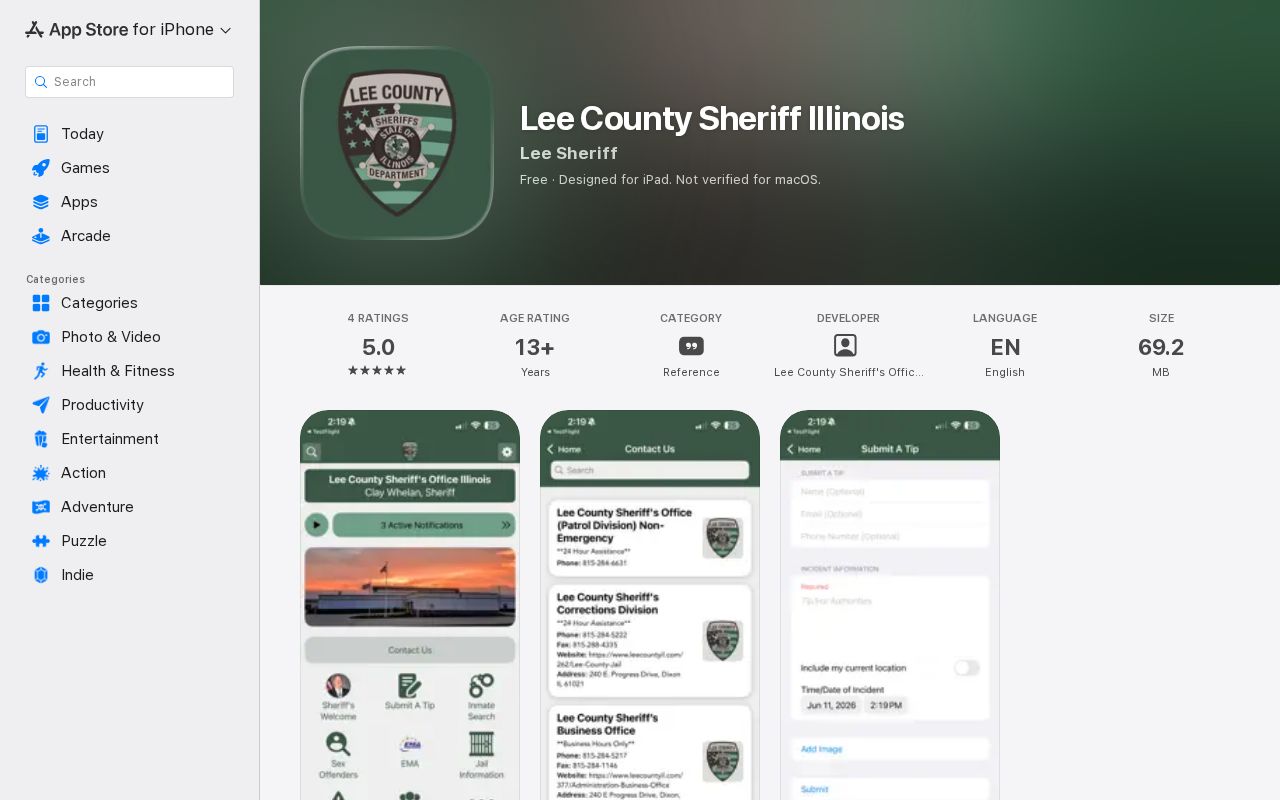
The app works as an alternate door to roster and alert information. It is an access channel, nothing more. It cannot prove every result is current. It also cannot prove a booking photo exists.
For release alerts, the jail links VINE for custody-change notifications. A VINE registration helps track a release event. It is neither a mugshot archive nor a court record, though, so use it only for that one purpose.
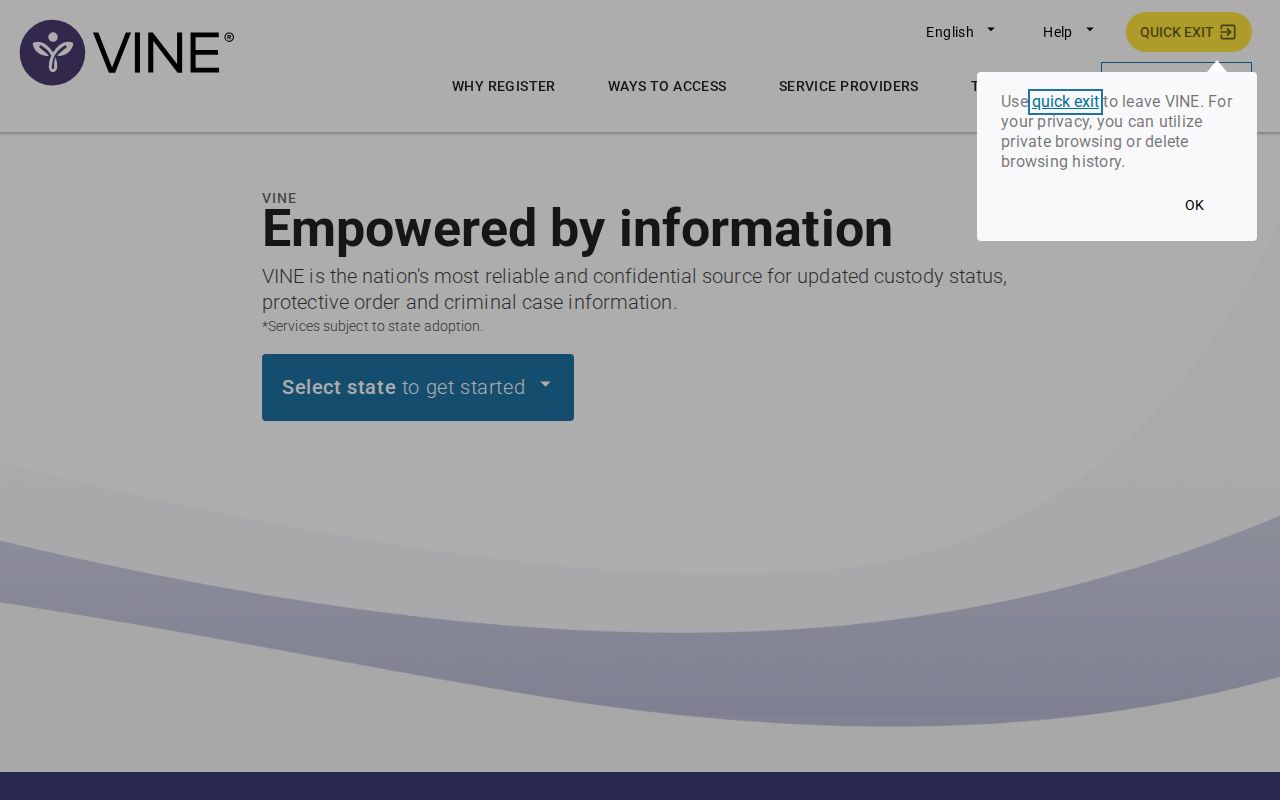
The VINE image shows a notification route, not a roster. Keep release alerts, current custody, and later court results in separate mental boxes when checking a name.
Lee County Jail Roster: Current Custody
Start at the Lee County Jail page and follow the link to the newest jail list. You will get a PDF called "Current Inmate List, by Name." Search it with the viewer's find tool or scan the alphabetized names. Then jot down the exact booking number. One caution applies. The list covers who is housed right now, not every arrest Lee County has ever logged.
Filters are limited. There is no web form for booking date, release date, or a named day. A county app may feel more interactive, though the official minutes never confirm it shows booking photos. The PDF itself is text only. It has no image column anywhere. You can see the public layout in the Current Inmate List, by Name document.
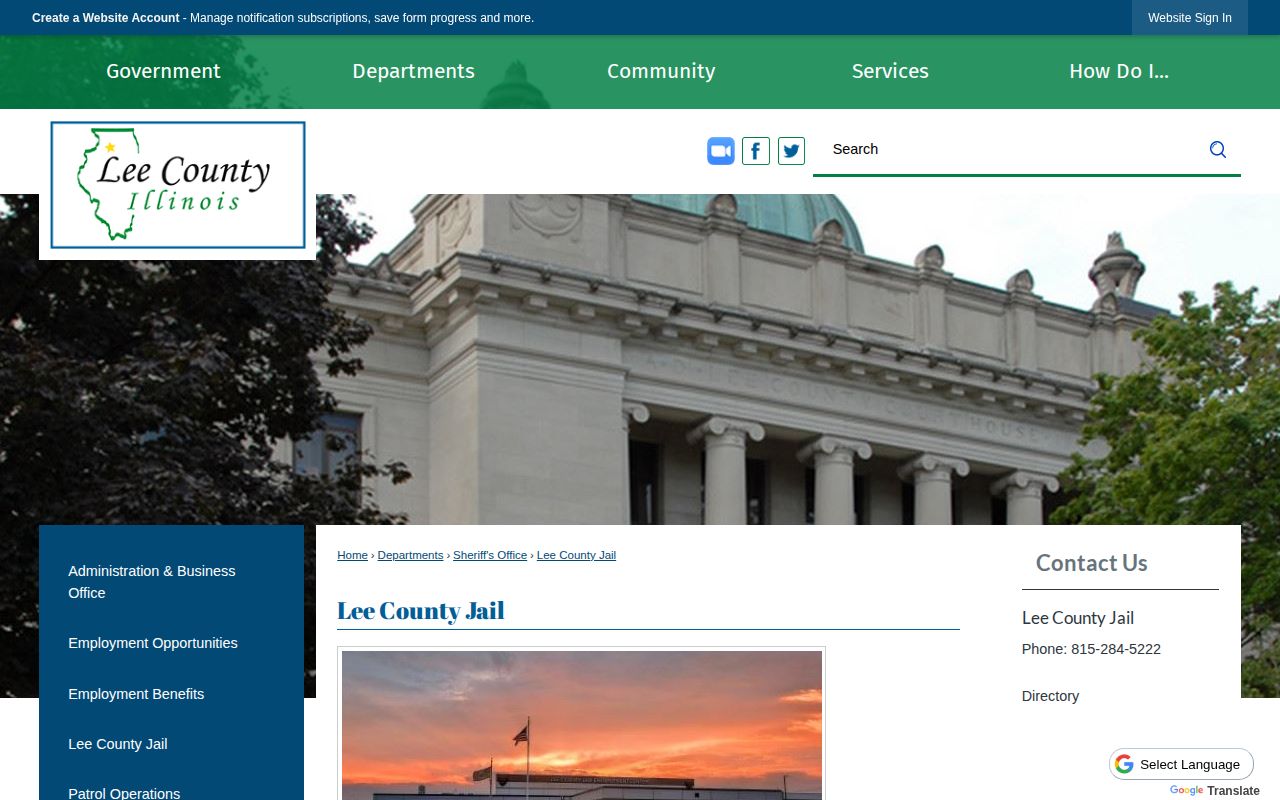
The roster answers one narrow question. Who appears on the county's current custody report? It promises no charges, no bond figure, no court date, no photo, and no full booking history.
| Roster search field | What the public document provides |
|---|---|
| Name | Printed inmate name, generally arranged by name for PDF finding. |
| Booking number | County booking identifier to preserve for a records request or cross-check. |
| PDF find | Browser or viewer text search, not a county-built online search form. |
| Total housed inmates | Report-level count, not a total of all recent arrests. |
| Photos, charges, bond, court date | Not part of the reviewed public current-list layout. |
Use the roster in five short moves:
- Open the official jail page.
- Choose the most recent jail list.
- Search the PDF by last name or read the name list.
- Record the booking number and report date.
- Use the seven-day report, court portal, or FOIA request for the next fact.
No fixed update schedule exists. The county publishes no set posting time. It gives no guaranteed removal window either. A name can vanish from the report after a release or a transfer, which only reflects the online publication. The underlying booking record and any photo still exist in county files.
Note: The roster's lack of a photo column is a fact about the public PDF, not proof that the sheriff never created a booking photograph.
Busted Bookings in the Seven-Day Report
For recent busted bookings, the county's multi-day feed is the strongest public window: a PDF titled “NEWS MEDIA for the last 7 days of Lee County Sheriff's Department Arrests.” It is dense with fields. Expect arrest time and date, booking number, inmate name, name number, birth date, arrest type, arrested by, location, offense date, statute, offense description, court, class, bond type with required and optional amounts, disposition, judicial status, and a clearance code where populated.
The format has no photos. It can also mislead in two ways: someone already released may still be listed, and a city incident that never became a county booking may not appear. Read “Arrested By” and “Loc. of Arrest” before naming an agency or city. The official seven-day arrest summary is field-rich but image-free, its seven-day label is just a publication window, and the county posts no fixed daily time or linked older reports.
No same-day or 24/48-hour feed exists separately. For anything time-sensitive, call the jail or the arresting agency. Never read a missing PDF entry as proof that no arrest happened.
What if a name is not there? Consider release, transfer, another agency's booking, or a window that has closed, then ask the sheriff or city records officer for the right record path. The “Disposition” heading is a useful lead, not a stand-in for the court docket.
Note: The seven-day report and current roster answer different questions, so a name can appear in one and not the other.
Illinois DOC Photos After Sentencing
The Illinois Department of Corrections Individual in Custody Search covers people in state custody or on parole. It is not a Lee County arrest search. Someone booked at the county jail and released may never show up there. The same goes for someone with a pending local case. The official IDOC search is the entry point for the state-custody path.
A profile there can hold a name, IDOC number, parent institution, status, location, admission or release data, sentencing details, and front and side photographs. IDOC's photo standards call for recurring photographs. They call for updates when appearance changes, plus photos at release or discharge. Those rules describe state recordkeeping. They do not promise that every older image is public.
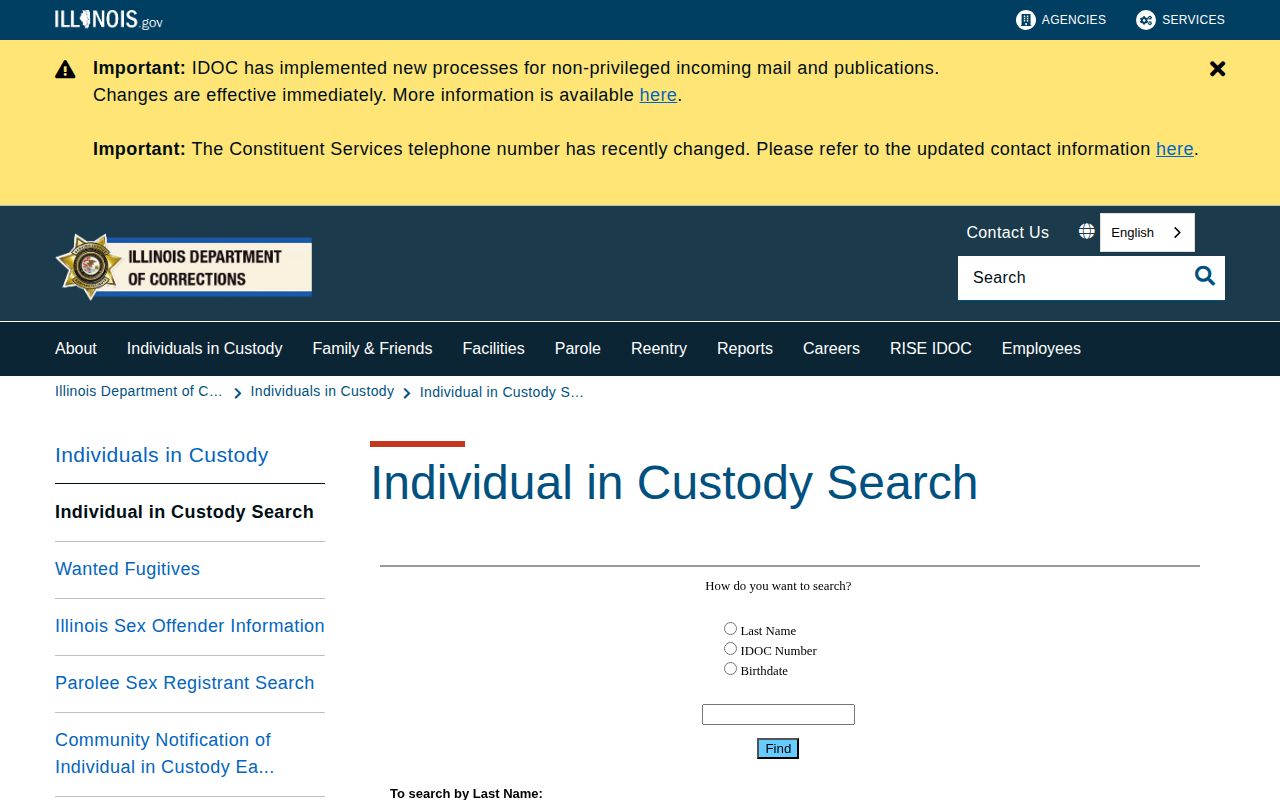
Search by last name, a partial spelling, IDOC number, or birthdate through the current or legacy interface. Match the full name and IDOC number first. Only then trust a profile photo as the right person. When a completed sentence no longer shows up, the IDOC FAQ routes record requests through its Contact Us page. Include full name, birth date, year received, and any known county or facility details there.
Note: A state individual-in-custody photograph and a Lee County booking photo can be different images made at different custody stages.
Booked, Released, or Sentenced
Custody status decides which system helps you. One name can move through several of them. Each system keeps its own photo, date, identifier, and legal label. The county list is not a state or federal locator.
Currently housed
Use the Lee County Current Inmate List. It shows each name with a booking number and no photo.
Recent or released
Use the seven-day arrest summary, court portals, and a focused FOIA request. Release removes a name from the live list.
Sentenced to IDOC
For custody status or parole details, the Illinois DOC search is the right tool. Keep in mind it covers state prison, not county bookings.
Federal or immigration
Use BOP for federal records and ICE for immigration detention. Neither locator works as a Lee County mugshot roster.
The Bureau of Prisons locator covers federal inmates from 1982 forward, showing status and location fields rather than booking photos. The ICE locator handles certain immigration custody cases and demands specific identity fields. A shared name in either system proves nothing about a Lee County arrest.
Once someone leaves county custody, the booking number and court case number are the best bridge between records. Label every note with its custody status. “Currently housed,” “recently booked,” “released,” “sentenced,” and “detained” are not synonyms.
After a Lee County Booking
A booking at the Lee County Jail opens a file that soon belongs to the courts. First appearances, detention hearings, release terms, charge changes, pleas, trials, and appeals all follow. For that part of the story, the Lee County Circuit Clerk is the hub, and the county points the public there for court information rather than to the jail.
Two tools carry the search. The Full Court Enterprise portal and the Clerk of Courts Records Inquiry work best side by side. Match the name, booking date, and case number, then compare filing dates, hearing dates, the initial charge, any later charge, release conditions, and the outcome. Fresh filings can lag. If nothing appears, call the clerk instead of assuming the case is closed. A capture of the Full Court Enterprise portal shows how jail data hands off to the public court system.
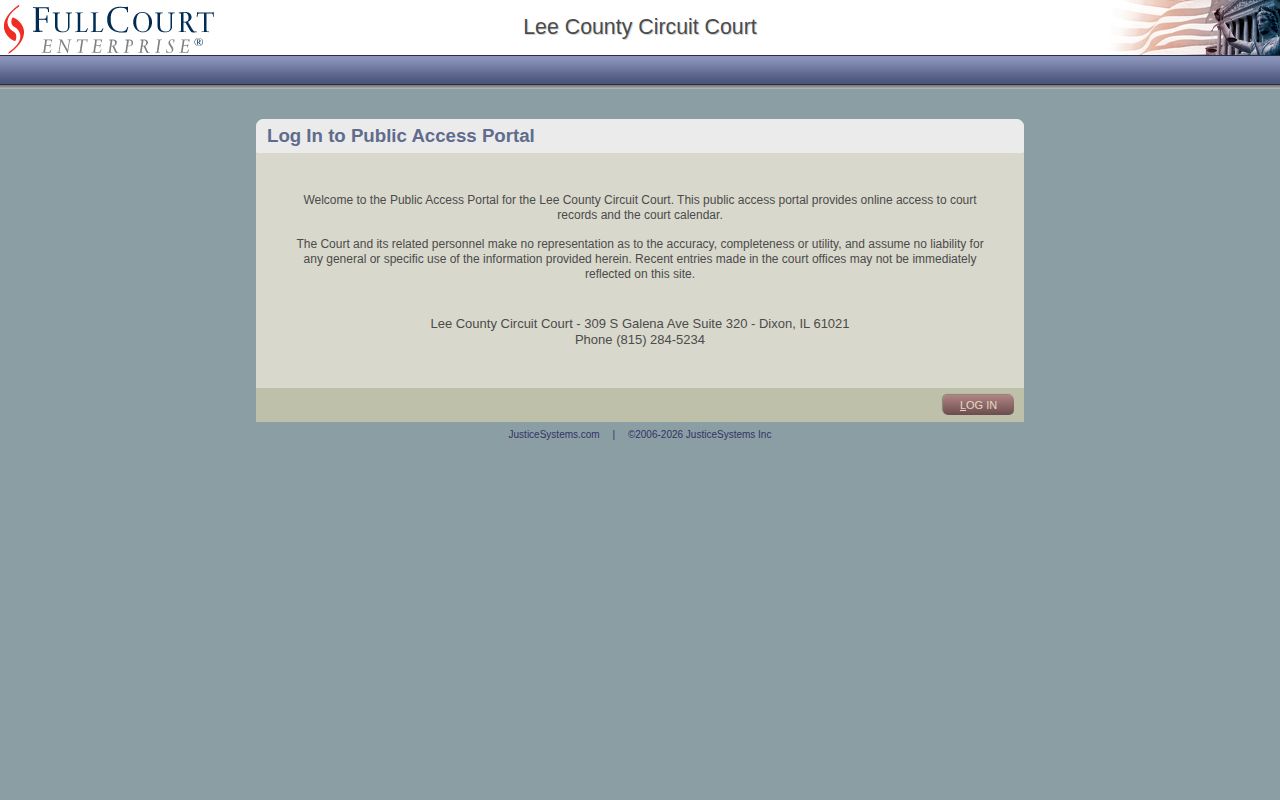
That image is a reference for the source interface, nothing more. The jail itself states it does not provide court dates. For hearings and final case status, go through the clerk or a court portal.
Note: The jail's “Disposition” field can point toward a case, but the court docket is the source for the legal outcome.
Busted Mugshots by Lee County City
City and county records meet at the point of custody. Each town in Lee County sits differently on that line. Dixon publishes a monthly police blotter and offers a police-specific FOIA route. Amboy has its own department plus a city-clerk FOIA path, though no verified daily arrest log. Ashton contracts with the sheriff for 20 hours of service each week. The village has no separate full-time booking roster to search.
Dixon Busted Mugshots
Start with the Dixon Police blotter for city activity. When a Dixon arrest lands in the Lee County Jail, move to the county list and seven-day report for the booking details.
Amboy Busted Mugshots
First confirm which agency made the Amboy arrest, police or sheriff. Then request the city report or the county booking record from whichever office actually holds it.
Ashton Busted Mugshots
A sheriff-booked event starts with the sheriff and the county jail. Village-held documents go through the Village Clerk.
News can fill the gaps. Shaw Local and smaller outlets cover all three communities, though any story is a secondhand account. The Lee County arrest-news page maps those outlets. It also shows the path back to official booking and court records.
For other municipalities and unincorporated spots, work through the arresting agency, county booking reports, court portals, and FOIA. A missing name on the top-three map implies no extra city page.
How Lee County Busted Records Split
Lee County splits its public records in a way that matters for searchers. One side is a sparse live custody list answering who is housed right now. The other is a richer recent-arrest report showing what fields were published for each booking. Neither PDF carries a booking photo.
So never stop after one check. Someone absent from the current list may still turn up in the seven-day report, a city blotter, a court file, or a records request. Two reports, two windows, one county system.
Busted Bond Payments in Lee County
The jail posts bond-payment instructions, not a bond schedule. Cash works if it's exact. Large amounts call for a certified bank check payable to the Lee County Circuit Clerk. Cards run through AllPaid, which adds a 7 percent nonrefundable fee.
Paying is not the same as release. Timing depends on the court and the jail process. Check the official jail page before sending money, since its directions can change without notice.
Why Lee County Busted Photos Stay Off PDFs
Why no photos? The current list and seven-day report are static or regenerated PDFs. They are not open historical databases. The public layout has no photo column, and the county posts no fixed schedule or archive window.
That does not mean the sheriff never releases a booking image. These documents just cannot serve as a photo gallery. Ask the records custodian about a releasable photo, and keep the booking number handy.
Lee County Busted App Access
The Lee County Sheriff Illinois app can search the inmate roster and charges. It also offers jail rules, visit info, commissary, alerts, tips, and agency contacts. That may beat digging through a PDF.
Booking-photo display is unverified in the app listings and county minutes. Treat photos as an open question. The app is no emergency service either, and it never replaces a records request or court search.
Busted Records, Then the Clerk
The jail says it plainly: court dates live elsewhere. Full Court Enterprise or the Circuit Clerk hold the answers on hearings and dispositions, while the jail answers custody questions. The handoff is clean once you know it.
Use the booking number and arrest date to bridge the two systems, then compare the court case number and the filed charge. A jail field can start the search. It cannot finish the case story.
Busted Records and Juvenile Privacy
Illinois law keeps juvenile arrest information confidential. The court system even maintains its own set of expungement forms just for juvenile matters, separate from the adult paperwork. A county roster without photos is not an invitation to rebuild a juvenile's identity from news stories, court files, or unofficial copies.
What if a protected record turns up anyway? Stop looking. Contact the agency or court that holds the record and follow its correction route. A copied page showing a name, photo, address, or charge is still not okay to share.
Busted Case Forms in Lee County
Need the right form? Two local stops in Lee County can help: the courthouse and the Dixon Public Library both offer legal self-help resources with neutral information on procedure. For the actual paperwork, the statewide Illinois Courts page carries the current expungement and sealing forms for both adults and juveniles.
Finding a form is one thing. Deciding what to file is another. Those resources point you toward paperwork, but they cannot rule on eligibility or promise that anything vanishes from your record overnight. Before filing, rely on the current statute, the court tied to the case, the Circuit Clerk, an attorney, or a qualified legal-aid provider.